
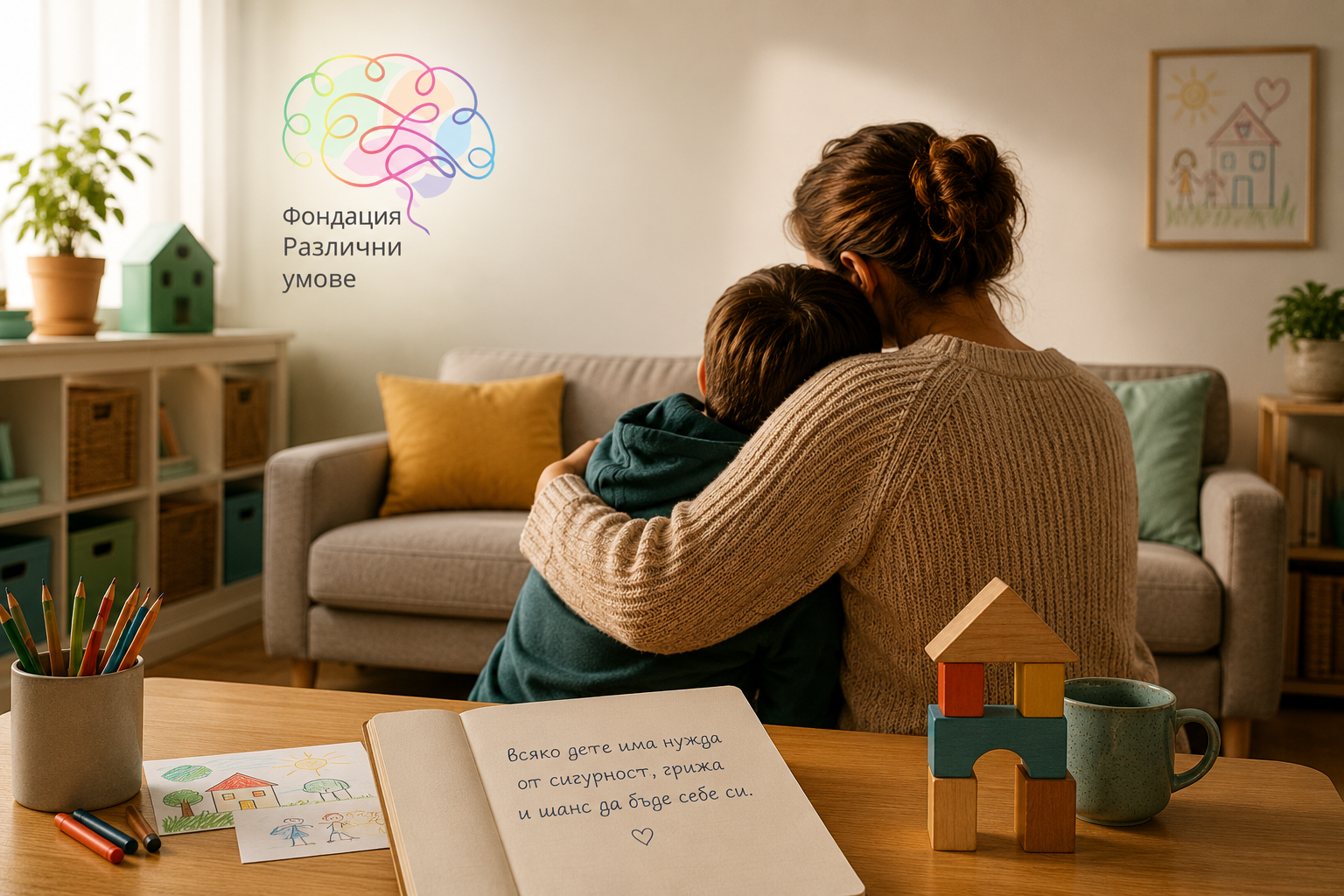
The topic of foster care is often pushed to the sidelines. Most people have heard of it, but rarely go beyond that. What remains is the feeling that it is something complicated, difficult or simply ‘not for me’.
This text is here precisely for that reason – to make the topic more understandable and relatable. Without trying to persuade or embellish. Rather, to give a realistic idea of what it means to become a foster parent and how this process begins.
What does foster care actually mean?
Foster care is not adoption. The child does not become part of the family permanently, but stays with the foster parent for a period during which they cannot live with their biological family.
Behind this lies something very concrete – everyday life. School, healthcare, rules, conversations, adjustment. And in many cases – a child who has already experienced insecurity.
According to the UN’s international guidelines on alternative care for children1, it is stated that children in a family or family-like environment achieve better developmental outcomes than those in institutional care:
This shows why this type of care is so important.
How does one become a foster parent?
The process in Bulgaria is relatively straightforward and involves several steps. It is coordinated by the Social Assistance Agency.2
It usually begins with submitting an application to the ‘Social Assistance’ department. This is followed by meetings with a social worker, aimed at understanding both your living conditions and your attitudes. There is also mandatory training, which covers real-life situations – adaptation, behaviour, boundaries.
If the process goes well, it leads to approval and registration, and then to the placement of a child. This is not done at random, but rather a match is sought between the child’s needs and the foster parent’s capabilities.
How great is the need, actually?
When we come to the question of whether there is a need for foster parents, the answer is not as clear-cut as it seems. In Bulgaria, every year thousands of children pass through the care system, and around 1,400–1,500 live in foster families. The number of foster parents is similar, which at first glance gives the impression that the system is balanced. In practice, however, this is not the case.
There are families waiting to take in a child, but there is no suitable placement for them. At the same time, there are children for whom a family is being sought, but one is hard to find. The reason lies not simply in the numbers, but in the match. Not every family can take on every child. Some children are older, others are siblings who must not be separated, and others have specific needs that require more preparation and support. It is precisely for them that finding a suitable environment takes longer.3
What people most often underestimate is not the application process, but everything that comes after it. Working with a child who doesn’t know you, building trust, situations with no quick solution, and moments when you simply have to stay and wait. Sometimes, accepting that your role has an end.
There is something else too – there is no ‘right’ profile for a foster parent. There are formal requirements, of course, but beyond those, what matters more is whether you can be a consistent presence in a child’s life, even when things aren’t organised or clear.
Children who have grown up outside a stable family environment are at greater risk of social isolation and difficulties with integration, which makes the role of the family – including the foster family – crucial, according to an analysis by the European Commission.4
There is probably no universal moment when a person decides they are fully ready for such a step. Rather, there is a moment when they begin to view the subject less abstractly and a little more realistically – what it looks like, what it requires and whether there is room for it in their life.
Sometimes that is enough to start a conversation that otherwise would not have taken place.
Sources:
1. United Nations: https://resourcecentre.savethechildren.net/pdf/5416.pdf?utm_source=chatgpt.com
2. Social Assistance Agency: https://asp.government.bg/bg/priemnagrizha/kakvo-e-priemna-grizha/
https://asp.government.bg/bg/deynosti/zakrila-na-deteto/osnovni-napravleniya-priemna-grizha/
3. Bulgarian News Agency: https://www.bta.bg/en/news/bulgaria/995127-315-foster-families-have-no-children-placed-with-them-revealing-significant-un
4. Report by the European Commission, cited by SOS Children’s Villages: https://ec.europa.eu/social/BlobServlet?docId=17444&langId=en